
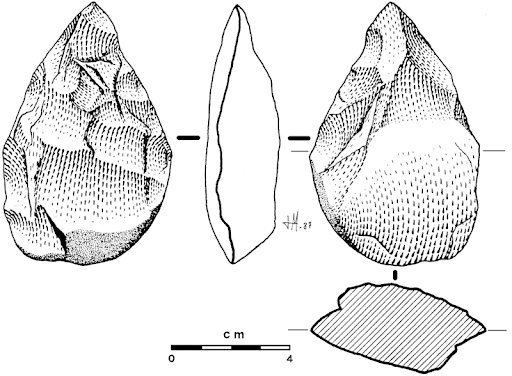
During the Paleolithic period, man used to break and shatter the stone nucleus as an initial step, and then introduce alterations to reshape it once again, keeping a part of it sleek to build a manual axe easy for human handling. This axe is then used for unearthing the ground, hunting animals, or cutting tree branches, in addition to a number of daily uses. Amongst the two important civilizations that appeared during the Paleolithic age, are the Abbevillian civilization and the Achulean civilization.
Prehistoric civilizations
Recent research has shown that the archaic human civilizations uncovered throughout the world had distinct traits and were not as comparable as previously thought. Rather, the degree of difference between them has grown to the point where researchers are no longer following the French approach represented in the civilizational divisions developed by these researchers without clarifying the local c...
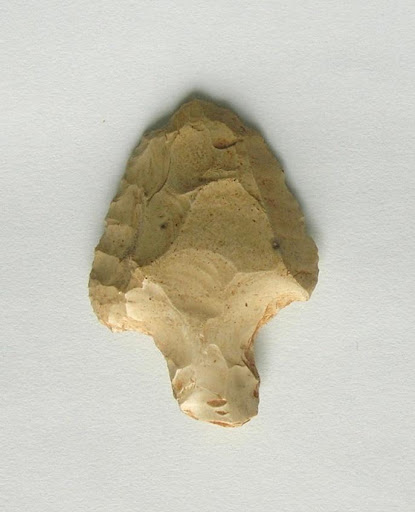
Acheulean Civilization
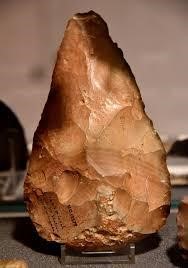
During the Paleolithic period, man used to break and shatter the stone nucleus as an initial step, and then introduce alterations to reshape it once again, keeping a part of it sleek to build a manual axe easy for human handling. This axe is then used for unearthing the ground, hunting animals, or cutting tree branches, in addition to a number of daily uses. Amongst the two important civilizations that appeared during the Paleolithic age, are the Abbevillian civilization and the Achulean civilization.
Learn moreMousterian civilization
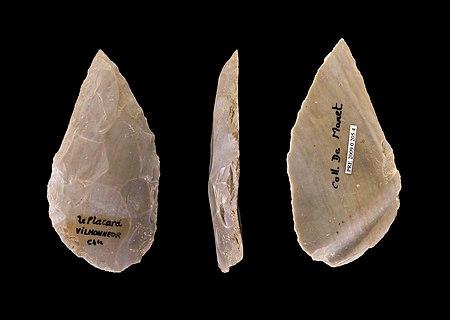
Mousterian forms of civilization have been discovered in a number of locations spanning Western Europe to China, including most of North Africa. Europe in this era was characterized by an industry of shrapnel known as the Mousterian industry, after the cave “Le Moustier” located in the Dordogne province in western France. This cave has been excavated since the 19th century and has become a strategic location for civilizations of that era. The tools from this place have been found in many parts of Western Europe, especially between the Loire and the Pyrenees mountain range.
Learn moreAterian Civilization
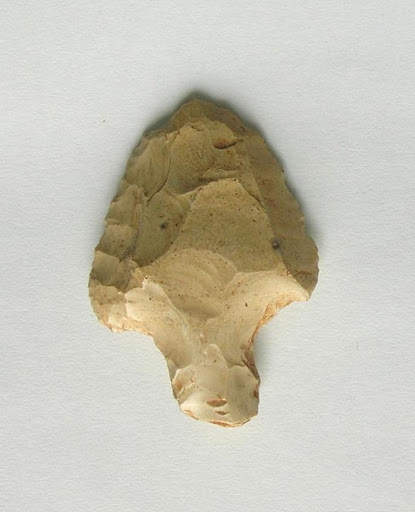
Nobody could have foreseen the discovery of the stone traces of this civilization that followed the final stretch of the Acheulean civilization, which were previously thought to be singular relics of the Mousterian or Levallois industry dating back to the Middle Paleolithic. However, the prevalence of these tools, the Mousterian tools and whose characteristics reflect an industry dating back to the Upper Paleolithic era, compelled scientists to investigate them. They soon discovered that they were up against a new stone industry whose geographical scope extended from the Atlantic Ocean in the west to the Nile Valley in the east, and from the Mediterranean coastlines in the north to the outskirts of Niger in the south, notably at the Sikdim site. The Aterian industry was found in various regions in Algeria, including the huge Zawiya site in the Saoura Ouedi region, the Reggane region, and Tin Inkaten in Tassili Najer, not to forget the site of Bir al-Atir, from which it got its name
Learn moreThe Oranian Civilization (Ibero-Maghrebian)
Researchers claim that the Ibero-Moroccan or Oranian culture, as some name it, and the Capsian civilization shared Algeria around ten thousand years ago. The first colonized coastal locations were found away from the shore in Tunisia, Algeria, Morocco, and the Saharan Atlas, such as Hamel and Al Houita. While the second was only found in the interior parts of western Tunisia, eastern Algeria, and some desert areas. The pioneers of this civilization were called “Mashta Al Arab” in reference to the first location where their skeletons were first found. They were also identified through the many skeleton remains that were found in cemeteries near Klumanta - Tiaret, and Afalou Bourmal in the coasts of Bejaia East coast of Algeria.
Learn moreCapsian Civilization
The Capsian civilization spanned about the eighth millennium to the fifth millennium BC, and more precisely 7350 BC. It is the earliest date for this civilization found by researchers at the site of Ain El Naqa near Masa’ad, in el Djelfa, to 4390 B.C. which is regarded as the most recent history of this civilization disclosed by the site of Columnata, Tiaret. The name of this civilization is derived from the word "Capsa," which is the historic name of the city of Gafsa, which welcomed the first seeds of its civilization before it spread to the southwestern part of Tunisia and the eastern central region of Algeria. The finding of new sites outside of the Capsa civilization's original location has been made possible by growing research into its past (Tebsa, Setif, Tiaret). According to J. Combs, this industry is unique in that it differs and is culturally separate from the French, Kenyan, and Aurignacian civilisation models, regardless of how their historical dimensions or manufacturing technique are related. This civilization emerged after the Ibero-Maghrebi in terms of chronological order.
Learn moreAcheulean Civilization
Mousterian civilization
Mousterian forms of civilization have been discovered in a number of locations spanning Western Europe to China, including most of North Africa. Europe in this era was characterized by an industry of shrapnel known as the Mousterian industry, after the cave “Le Moustier” located in the Dordogne province in western France. This cave has been excavated since the 19th century and has become a strategic location for civilizations of that era. The tools from this place have been found in many parts of Western Europe, especially between the Loire and the Pyrenees mountain range.
Aterian Civilization
Nobody could have foreseen the discovery of the stone traces of this civilization that followed the final stretch of the Acheulean civilization, which were previously thought to be singular relics of the Mousterian or Levallois industry dating back to the Middle Paleolithic. However, the prevalence of these tools, the Mousterian tools and whose characteristics reflect an industry dating back to the Upper Paleolithic era, compelled scientists to investigate them. They soon discovered that they were up against a new stone industry whose geographical scope extended from the Atlantic Ocean in the west to the Nile Valley in the east, and from the Mediterranean coastlines in the north to the outskirts of Niger in the south, notably at the Sikdim site. The Aterian industry was found in various regions in Algeria, including the huge Zawiya site in the Saoura Ouedi region, the Reggane region, and Tin Inkaten in Tassili Najer, not to forget the site of Bir al-Atir, from which it got its name
The Oranian Civilization (Ibero-Maghrebian)
Researchers claim that the Ibero-Moroccan or Oranian culture, as some name it, and the Capsian civilization shared Algeria around ten thousand years ago. The first colonized coastal locations were found away from the shore in Tunisia, Algeria, Morocco, and the Saharan Atlas, such as Hamel and Al Houita. While the second was only found in the interior parts of western Tunisia, eastern Algeria, and some desert areas. The pioneers of this civilization were called “Mashta Al Arab” in reference to the first location where their skeletons were first found. They were also identified through the many skeleton remains that were found in cemeteries near Klumanta - Tiaret, and Afalou Bourmal in the coasts of Bejaia East coast of Algeria.
Capsian Civilization
The Capsian civilization spanned about the eighth millennium to the fifth millennium BC, and more precisely 7350 BC. It is the earliest date for this civilization found by researchers at the site of Ain El Naqa near Masa’ad, in el Djelfa, to 4390 B.C. which is regarded as the most recent history of this civilization disclosed by the site of Columnata, Tiaret. The name of this civilization is derived from the word "Capsa," which is the historic name of the city of Gafsa, which welcomed the first seeds of its civilization before it spread to the southwestern part of Tunisia and the eastern central region of Algeria. The finding of new sites outside of the Capsa civilization's original location has been made possible by growing research into its past (Tebsa, Setif, Tiaret). According to J. Combs, this industry is unique in that it differs and is culturally separate from the French, Kenyan, and Aurignacian civilisation models, regardless of how their historical dimensions or manufacturing technique are related. This civilization emerged after the Ibero-Maghrebi in terms of chronological order.